Tesla lawsuit settlement claims are paying out in 2026 for several major cases. These include Autopilot crash claims, battery defect lawsuits, and data privacy violations.
If you owned or leased a Tesla vehicle between 2012 and 2024, you may have money waiting. Some claimants are receiving checks between $500 and $30,000 depending on their case type.
This guide covers every active Tesla settlement in 2026. You will learn exactly who qualifies, how much you can expect, and the filing deadlines you cannot miss.
One surprising fact: Tesla has faced over 200 individual lawsuits related to Autopilot alone. Several have settled quietly for six and seven figures.
Here is everything you need to know to get your share.
Tesla Lawsuit Settlement
A Tesla lawsuit settlement is a legal agreement where Tesla pays money to resolve claims without going to trial. These settlements cover vehicle defects, software failures, misleading advertising, and injury claims.
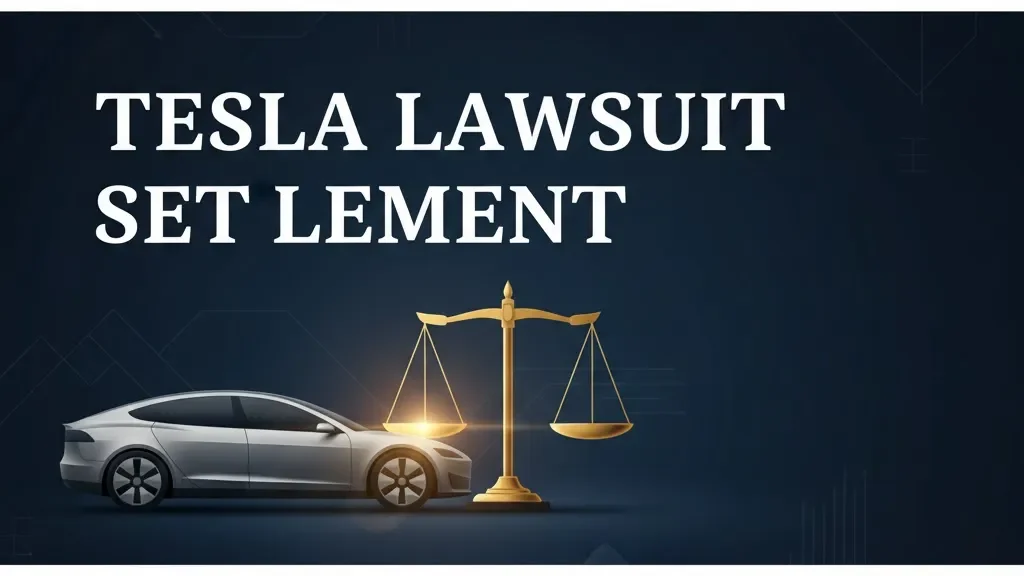
Tesla has been involved in both class action lawsuits and individual settlements. Class actions combine thousands of claimants into one case. Individual settlements handle specific injury or death claims separately.
| Settlement Type | Description | Typical Range |
|---|---|---|
| Class Action | Groups of consumers with similar claims | $50 to $5,000 per person |
| Individual Injury | Personal injury from vehicle defect | $50,000 to $2 million |
| Wrongful Death | Fatal accidents involving Tesla defects | $500,000 to $10 million |
| Data Privacy | Unauthorized data collection or breaches | $100 to $1,000 per person |
The company does not admit fault in most settlements. This is standard legal practice. It allows Tesla to pay claimants while avoiding precedent for future cases.
Settlement funds come from Tesla directly or through insurance. A neutral third-party administrator handles distribution to ensure fairness.
You do not need a lawyer to join most class action settlements. Individual injury claims typically require legal representation.
Tesla Class Action Settlement 2026
Tesla class action settlements in 2026 include multiple open cases with active claim periods. The largest involve Autopilot misrepresentation, battery degradation, and phantom braking issues.
The Autopilot advertising class action alleges Tesla overstated the system’s capabilities. Owners who purchased Full Self Driving (FSD) packages between 2016 and 2023 may qualify for refunds or compensation.
A battery degradation lawsuit covers Model S and Model X vehicles from 2012 to 2019. Tesla allegedly limited battery capacity through software updates without owner consent.
Key 2026 Class Action Cases:
- FSD Advertising Settlement: Covers buyers who paid for Full Self Driving features that were not delivered as promised
- Battery Throttling Settlement: Addresses software updates that reduced range and charging speed
- Phantom Braking Settlement: Involves sudden unexpected braking events causing accidents
- Data Collection Settlement: Concerns unauthorized recording through in-car cameras
The phantom braking class action is newer. It covers incidents from 2021 to 2024 where Teslas braked suddenly without obstacles present.
Each settlement has separate deadlines and eligibility windows. Check your specific situation against multiple cases.
Key Takeaway: Multiple Tesla class actions are paying out in 2026, so check if your vehicle model and purchase year match any open cases.
How Much Is Tesla Settlement
Tesla settlement amounts vary wildly based on case type and individual circumstances. Class action members typically receive between $200 and $5,000 per claim.
Think of it like airline compensation. A delayed flight gets you a voucher. A crash gets you millions. Tesla settlements work the same way.
| Claim Category | Low Estimate | High Estimate | Average |
|---|---|---|---|
| FSD Refund Claims | $1,000 | $15,000 | $5,000 |
| Battery Degradation | $500 | $3,000 | $1,200 |
| Minor Accident Injury | $10,000 | $100,000 | $35,000 |
| Serious Injury | $100,000 | $2,000,000 | $450,000 |
| Wrongful Death | $500,000 | $10,000,000 | $2,500,000 |
| Data Privacy | $100 | $1,000 | $250 |
Individual injury settlements run much higher. A 2023 Autopilot crash case settled for $1.5 million. Another wrongful death case paid $3.2 million to the victim’s family.
Your payout depends on several factors. These include documentation quality, injury severity, and whether you can prove Tesla knew about the defect.
Class action payouts shrink as more people file. If 100,000 people claim from a $50 million fund, each person gets about $500. Fewer claimants mean bigger checks.
Do not expect life-changing money from most class actions. But do file anyway. That money is yours.
Tesla Autopilot Settlement Payout
Tesla Autopilot settlement payouts are the largest category of Tesla litigation. Fatal and serious injury cases have settled for millions.
The Autopilot system uses cameras and sensors to assist with driving tasks. Lawsuits claim Tesla marketed it as safer than human driving when the technology was not ready.
A Florida wrongful death case involving Autopilot settled for $2.4 million in 2024. A California injury case paid $875,000 to a driver who struck a highway barrier.
Autopilot Settlement Factors:
- Severity of injuries or death
- Whether Autopilot was engaged at the time
- Tesla’s knowledge of the specific defect
- Victim’s contributory negligence
- State where the accident occurred
Non-injury Autopilot claims get less. If you bought FSD and it never worked as advertised, expect compensation between $1,000 and $15,000.
Tesla often requires confidentiality agreements in large settlements. This is why you do not hear exact figures for most cases.
The company has paid over $300 million in Autopilot-related settlements since 2019. That number continues climbing in 2026.
Tesla Settlement Eligibility
Tesla settlement eligibility depends on which case applies to you. Each lawsuit has specific criteria based on vehicle model, purchase date, and the issue experienced.
The basic requirement for most class actions is proof of Tesla ownership or lease during the relevant period. This can be a purchase contract, registration, or title document.
General Eligibility Factors:
- You owned or leased a covered Tesla model
- Your ownership dates fall within the class period
- You experienced the issue described in the lawsuit
- You have not already settled individually with Tesla
- You did not opt out of the class action
Battery degradation settlements cover specific VIN ranges. Not every Tesla with battery issues qualifies. Only vehicles with confirmed software throttling are included.
| Settlement | Covered Models | Class Period | Deadline |
|---|---|---|---|
| FSD Advertising | All models with FSD package | 2016 to 2023 | June 2026 |
| Battery Throttling | Model S, Model X | 2012 to 2019 | April 2026 |
| Phantom Braking | Model 3, Model Y | 2021 to 2024 | August 2026 |
| Data Privacy | All models with cabin cameras | 2019 to 2024 | October 2026 |
Injury and wrongful death claims have no class period limits. Statutes of limitation vary by state but typically range from two to four years.
Check multiple settlements. You might qualify for more than one.
Key Takeaway: Eligibility varies by settlement, so verify your vehicle model, VIN, and purchase dates against each open case.
Who Qualifies for Tesla Settlement
Anyone who owned, leased, or purchased a Tesla vehicle during covered periods may qualify. This includes individuals, businesses, and fleet operators.
Current owners qualify if the issue occurred during their ownership. Previous owners qualify if they owned the car during the class period, even if they sold it later.
Who Definitely Qualifies:
- Original purchasers of Tesla vehicles with documented defects
- Lessees who held contracts during the class period
- Secondary buyers who purchased from original owners during covered dates
- Family members of deceased victims in wrongful death cases
- Injured passengers in Tesla accident cases
Who Does Not Qualify:
- Owners of vehicles outside the specified VIN range
- People who purchased after the class period ended
- Those who already received individual settlements
- Owners who formally opted out of class actions
- Tesla employees in certain corporate positions
Used car buyers have the same rights as original owners. If you bought a 2017 Model S in 2022, you can still claim for battery issues that occurred from 2012 to 2019.
Business fleets with multiple Teslas can file claims for each vehicle. A company with 50 qualifying vehicles can submit 50 separate claims.
Geographic location matters too. Some settlements only cover U.S. purchases. Others include Canada and certain international markets.
How to File Tesla Settlement Claim
Filing a Tesla settlement claim takes about 15 to 30 minutes for most class actions. You need basic information about your vehicle and purchase.
Start by visiting the official settlement website for your specific case. Do not use third-party claim filing services. They take a cut of your payout.
Step-by-Step Filing Process:
- Locate the official settlement notice or administrator website
- Enter your vehicle VIN to verify eligibility
- Create an account with your email address
- Complete the claim form with ownership details
- Upload required documentation
- Submit and save your confirmation number
- Wait for claim verification and approval
The claim form asks for your name, address, vehicle identification number, purchase date, and a description of any issues experienced.
| Required Information | Where to Find It |
|---|---|
| Vehicle VIN | Driver door jamb, registration, or title |
| Purchase Date | Bill of sale or contract |
| Lease End Date | Lease agreement |
| Mileage at Issue | Service records |
| Contact Information | Current address and email |
Submit early if possible. Some settlements pay on a first-come basis until funds run out. Others prorate payments based on total claims received.
You will receive email confirmation within 48 hours. If you do not, check your spam folder and contact the administrator.
Key Takeaway: File directly through official settlement websites to avoid third-party fees and ensure your claim gets processed correctly.
Tesla Lawsuit Deadline 2026
Tesla lawsuit deadlines in 2026 span from April through October depending on the specific settlement. Missing these dates means losing your claim forever.
Class action claim deadlines are firm. Courts do not grant extensions for individual claimants who forgot or did not know.
2026 Tesla Settlement Deadlines:
| Settlement Name | Claim Deadline | Final Hearing |
|---|---|---|
| Battery Throttling | April 15, 2026 | May 2026 |
| FSD Advertising | June 30, 2026 | August 2026 |
| Phantom Braking | August 31, 2026 | October 2026 |
| Data Privacy | October 15, 2026 | December 2026 |
Individual lawsuit deadlines follow state statutes of limitation. Personal injury claims typically have two to three years from the accident date. Wrongful death claims have one to three years depending on the state.
California has a two-year limit for personal injury. Texas allows two years. Florida gives four years for most product liability claims.
Do not wait until the deadline. Online systems can crash. Documentation takes time to gather. Submit at least two weeks early.
Sign up for email alerts from settlement administrators. They send reminders before deadlines approach.
Tesla Settlement Check Timeline
Tesla settlement checks typically arrive four to eight months after claim submission and court approval. The exact timeline depends on the settlement stage and total claims filed.
Courts must grant final approval before any money goes out. This happens after an objection period where class members can contest the settlement terms.
Settlement Check Timeline Phases:
| Phase | Duration | What Happens |
|---|---|---|
| Claim Submission | Day 1 | You submit your claim |
| Verification | 30 to 60 days | Administrator reviews documentation |
| Final Approval Hearing | 60 to 90 days | Court approves settlement |
| Objection Period | 30 days | Class members can object |
| Check Distribution | 60 to 120 days | Payments mailed or deposited |
If you chose direct deposit, funds arrive faster. Paper checks go through postal mail and can take an extra week or two.
Large settlements with thousands of claimants take longer. The administrator must calculate each person’s share based on their specific circumstances.
Some settlements offer early partial payments. You might receive 70% initially, then the remainder after final accounting.
Track your claim status through the administrator’s online portal. They update it after each processing phase.
Tesla Battery Fire Lawsuit Settlement
Tesla battery fire settlements address claims that lithium-ion batteries in certain models were defective. These cases involve both property damage and personal injury claims.
The batteries in question could allegedly overheat and ignite without warning. Several garage fires and vehicle fires on roadways prompted legal action.
| Model | Years Affected | Known Incidents | Settlement Status |
|---|---|---|---|
| Model S | 2012 to 2019 | 14 confirmed fires | Settled |
| Model X | 2015 to 2019 | 6 confirmed fires | Pending |
| Model 3 | 2018 to 2021 | 4 confirmed fires | Under review |
Individual fire victims have received settlements ranging from $50,000 for property damage to over $1 million for burn injuries.
The class action portion covers vehicles that did not catch fire but had the same defective battery design. These owners receive smaller payments for the defect risk they faced.
Battery fire claimants need incident reports or fire department records. Insurance claims documenting the fire also help prove your case.
Tesla recalled some affected vehicles. If you had the repair performed, you can still claim for the period before the fix.
Key Takeaway: Battery fire victims can pursue both individual injury claims and class action membership for different types of compensation.
Tesla Sudden Acceleration Settlement
Tesla sudden acceleration settlements involve claims that vehicles accelerated unexpectedly without driver input. NHTSA investigated these complaints starting in 2019.
The agency reviewed over 200 complaints of sudden unintended acceleration. While NHTSA found no defect, private lawsuits continued based on individual evidence.
Common Sudden Acceleration Scenarios:
- Vehicle accelerating while in park
- Unexpected acceleration when foot on brake
- Acceleration failure to respond to brake pedal
- Acceleration during parking maneuvers
- Acceleration at low speeds without throttle input
Individual settlements have paid between $25,000 and $500,000 depending on injuries and property damage.
One notable case involved a Model X that crashed through a garage wall. The settlement paid $185,000 for property damage and minor injuries.
Class action status remains uncertain for sudden acceleration claims. Courts have been reluctant to certify a class without NHTSA finding a defect.
Your best path for sudden acceleration claims is an individual lawsuit. Document everything: dashcam footage, witness statements, and repair records.
Tesla Data Privacy Settlement
Tesla data privacy settlements address unauthorized collection and sharing of driver information. This includes cabin camera recordings, location data, and driving behavior.
Reports emerged that Tesla employees viewed and shared private camera footage. Some recordings captured drivers in embarrassing or compromising situations.
The data privacy class action covers all Tesla vehicles equipped with cabin cameras from 2019 forward. That includes Model 3, Model Y, and updated Model S and Model X vehicles.
Data Collected by Tesla:
- Cabin camera video and audio
- GPS location history
- Driving speed and behavior
- Navigation destinations
- Voice commands
- Contact lists synced from phones
Settlement amounts for data privacy claims typically range from $100 to $1,000 per affected owner. The exact amount depends on total claims filed.
You qualify even if you do not know specifically that your data was misused. The class covers everyone whose data could have been accessed.
No proof of specific harm is required. The unauthorized collection itself creates the claim.
Key Takeaway: Every Tesla owner with cabin cameras from 2019 onward likely qualifies for the data privacy settlement regardless of specific data misuse.
Tesla Settlement Proof Required
Tesla settlements require documentation proving you owned the vehicle during the covered period. The specific documents depend on the settlement type.
Class actions have lower proof standards than individual claims. You may only need a VIN and purchase date for basic class action membership.
Standard Documentation Requirements:
| Document Type | Class Actions | Individual Claims |
|---|---|---|
| Purchase Contract | Helpful | Required |
| Vehicle Title | Helpful | Required |
| Registration | Accepted | Accepted |
| Lease Agreement | Accepted | Required |
| Service Records | Not needed | Helpful |
| Incident Reports | Not needed | Required |
| Medical Records | Not needed | Required |
| Photos/Videos | Not needed | Highly valuable |
For injury claims, you need comprehensive medical documentation. This includes hospital records, treatment notes, bills, and ongoing care plans.
Accident reports from police strengthen any injury claim. Get the official report even if the incident seemed minor at the time.
Keep all Tesla correspondence. Emails, app notifications, and service center communications can prove Tesla knew about issues affecting your vehicle.
Tesla Settlement Without Proof of Purchase
You can file some Tesla settlement claims without a proof of purchase document. Alternatives exist when original paperwork is unavailable.
The DMV maintains registration records for years. Request a registration history showing your name on the vehicle during the relevant period.
Alternative Documentation Options:
- DMV registration history report
- Insurance policy declarations showing the vehicle
- Loan or financing statements
- Credit card statements for the purchase
- Tesla account records linked to the VIN
- Service appointment confirmations
- Supercharger usage records tied to your account
Tesla keeps ownership records in their system. If your Tesla account was linked to the vehicle, the administrator can often verify ownership directly.
Some settlements accept sworn declarations. You sign a statement under penalty of perjury attesting to ownership details.
| Proof Alternative | Acceptance Rate | Notes |
|---|---|---|
| DMV Records | High | Official government source |
| Insurance Records | High | Shows VIN and dates |
| Tesla Account Data | Medium | Requires administrator verification |
| Sworn Declaration | Medium | May require additional verification |
| Witness Statements | Low | Rarely accepted alone |
Contact the settlement administrator before submitting without documentation. They can tell you exactly what alternatives they accept.
Key Takeaway: Missing purchase documents do not automatically disqualify you; DMV records and insurance statements can substitute.
Is Tesla Settlement Legit
Yes, Tesla settlements are legitimate court-supervised legal proceedings. Scammers do target settlement claimants, so verify before sharing information.
Real settlement notices come through official channels. The court appoints administrators with verifiable credentials and professional history.
How to Verify a Settlement Is Real:
- Search the case number on PACER (federal court records)
- Check the settlement administrator’s BBB rating
- Look for news coverage from Reuters, Bloomberg, or legal publications
- Verify the law firm involved has a real website and bar registrations
- Confirm the settlement website domain matches court documents
Scam red flags include requests for upfront payment. Legitimate settlements never charge you to file a claim. The administrator gets paid from the settlement fund.
| Legitimate Settlement Signs | Scam Warning Signs |
|---|---|
| Court case number provided | No case number given |
| Free claim filing | Upfront fees requested |
| Official administrator named | Anonymous contacts |
| Media coverage exists | No news verification |
| Law firm verifiable | No attorney identified |
| Reasonable claim deadline | Urgent immediate deadline |
If someone calls claiming you are owed Tesla settlement money, hang up. Real administrators send written notices. They do not cold-call.
Report suspected scams to the Federal Trade Commission and your state attorney general.
Tesla Settlement Administrator
The Tesla settlement administrator is the neutral third party responsible for processing claims and distributing payments. Courts appoint these companies to handle logistics.
Different settlements use different administrators. Major settlement administration firms include Epiq Systems, KCC Class Action Services, and Gilardi and Co.
Administrator Responsibilities:
- Processing claim submissions
- Verifying eligibility and documentation
- Calculating individual payment amounts
- Mailing settlement checks
- Answering claimant questions
- Reporting to the court on distribution progress
Contact information for administrators appears in official settlement notices. Most have dedicated phone lines and email addresses for each case.
| Administrator | Typical Cases | Contact Method |
|---|---|---|
| Epiq Systems | Large consumer class actions | Online portal, phone |
| KCC Class Action Services | Product liability settlements | Email, online forms |
| Gilardi and Co | Securities and consumer cases | Dedicated case websites |
| JND Legal Administration | Complex multi-district litigation | Online portal |
Administrators cannot give you legal advice. They can only explain claim procedures and requirements.
Response times vary. During peak periods, expect three to five business days for email replies.
Key Takeaway: Settlement administrators are court-appointed neutral parties; contact them directly for claim status questions rather than using third-party services.
Tesla Settlement Tax Implications
Tesla settlement payments may be taxable income depending on the type of compensation received. Physical injury settlements are typically tax-free while other payments are taxable.
The IRS treats different settlement components differently. Understanding this helps you plan for tax season.
Tax Treatment by Settlement Type:
| Payment Type | Taxable | Reason |
|---|---|---|
| Physical Injury Compensation | No | IRC Section 104 exclusion |
| Emotional Distress (with injury) | No | Connected to physical injury |
| Emotional Distress (no injury) | Yes | No injury exclusion applies |
| Lost Wages | Yes | Would have been taxable as income |
| Punitive Damages | Yes | Always taxable |
| Property Damage | Depends | Only taxable if exceeds basis |
| Class Action Consumer Refunds | Maybe | Depends on original deduction |
If you receive over $600, the settlement administrator sends a 1099 form. This reports the payment to the IRS.
Physical injury settlements require allocation. If your $100,000 settlement includes $70,000 for injuries and $30,000 for lost wages, only the $30,000 is taxable.
Attorney fees can sometimes be deducted. The rules changed in 2018, so consult a tax professional for current guidance.
Set aside 25% to 30% of taxable settlement amounts for taxes. This prevents surprises when filing your return.
Frequently Asked Questions
How do I know if I qualify for a Tesla lawsuit settlement?
Check your vehicle model, VIN, and purchase date against the specific settlement requirements.
Each settlement covers different models and time periods.
Visit the official settlement website and enter your VIN to instantly verify eligibility.
When will Tesla settlement checks be mailed in 2026?
Most Tesla settlement checks will mail between June and December 2026.
The exact timing depends on final court approval and total claims filed.
Battery throttling payments are expected first, around June 2026.
Can I file a Tesla settlement claim without a receipt?
Yes, you can file using alternative documentation like DMV records or insurance statements.
The settlement administrator accepts various proof types beyond the original purchase receipt.
Contact the administrator directly to confirm what alternatives they accept.
Is the Tesla class action settlement taxable income?
Physical injury compensation is tax-free under federal law.
Refunds, lost wages, and punitive damages are generally taxable.
You will receive a 1099 if your payment exceeds $600.
What is the average Tesla Autopilot settlement payout?
Class action Autopilot claims average between $1,000 and $5,000 per person.
Individual injury settlements average around $450,000.
Fatal accident cases have settled for $2 million to $10 million.
This is the year to act on Tesla settlement claims. Multiple cases have open filing periods with deadlines throughout 2026.
Gather your vehicle documents now. Check each settlement to see which ones apply to your situation.
File your claims early. Do not wait until the final deadline when systems get overwhelmed.
Your settlement money is waiting. Go get it.