The Roblox lawsuit addiction wave is real, growing, and picking up speed across the country in 2026. Families are suing Roblox Corporation for designing a platform they say hooked their kids on purpose, leading to depression, anxiety, academic failure, and thousands of dollars lost on in-game purchases.
This is not a small legal fight. Over 100 video game addiction claims involving Roblox are coordinated under JCCP No. 5363 in California state court. Separately, 148 federal lawsuits sit in a child exploitation MDL as of May 2026.
What will you learn here? Everything: estimated payout ranges, who qualifies, what evidence you need, how to file, the deadlines that matter, and what state attorneys general are doing to put pressure on Roblox. Some legal analysts estimate individual addiction cases with well-documented harm could produce compensation of $100,000 to $300,000 or more.
If your child played Roblox obsessively and suffered for it, this guide breaks down every angle of the 2026 legal situation.
Roblox Addiction Lawsuit 2026 Update
The Roblox addiction lawsuit is active and expanding in 2026, with new cases being added regularly across both state and federal courts. Roblox Corporation is facing hundreds of lawsuits filed by parents and state attorneys general about the safety of its platform for children.
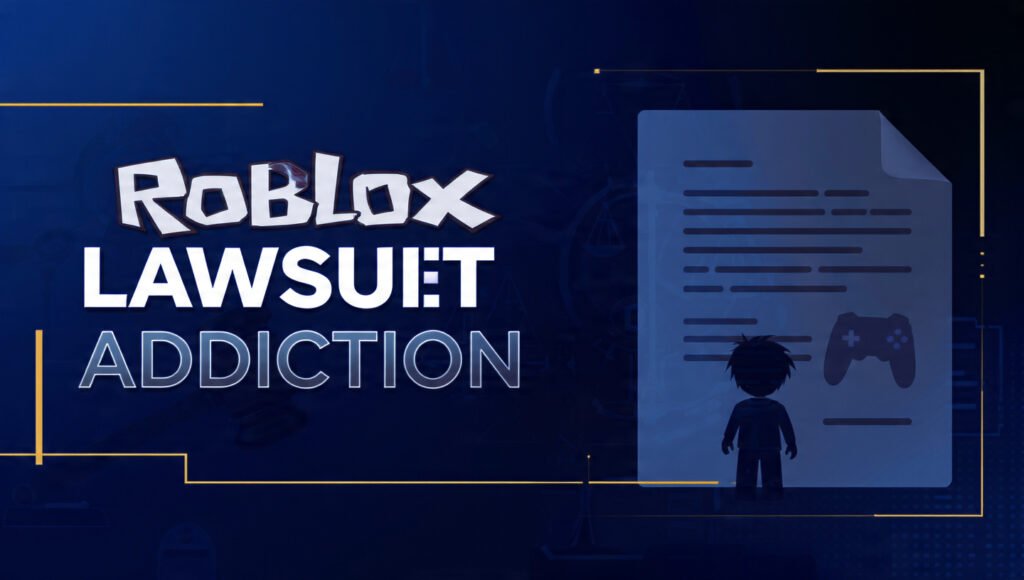
The largest cluster of Roblox-related litigation involves addiction claims filed by families across the United States, coordinated in California state court under JCCP No. 5363 before a single judge in Los Angeles County Superior Court. Judge Samantha P. Jessner of the Los Angeles Superior Court will oversee this consolidation.
The Judicial Panel on Multidistrict Litigation has twice denied requests to create a federal MDL specifically for gaming addiction claims. The panel concluded the cases could be effectively managed in state court coordination. Individual federal lawsuits remain active, but the California JCCP continues to be the primary vehicle for addiction claims.
On a separate track, as of April 2026, all federal exploitation cases are now consolidated into MDL No. 3166 in the Northern District of California, with roughly 132 lawsuits as part of the MDL as of March 2026.
| Detail | Status |
|---|---|
| Addiction Cases (State) | JCCP 5363, Los Angeles Superior Court |
| Exploitation Cases (Federal) | MDL 3166, N.D. California |
| Presiding Judge (Addiction) | Judge Samantha P. Jessner |
| Presiding Judge (Exploitation) | Chief Judge Richard Seeborg |
| Addiction Settlements Finalized | None as of mid-2026 |
| New Cases Being Accepted | Yes |
Parents and young people continue to file lawsuits related to addiction to Roblox and the alleged mental health consequences for kids who overuse the game.
Roblox Addiction Lawsuit Payout
No finalized payouts exist yet for Roblox addiction cases, but early projections are significant. No settlements have been finalized as of February 2026. Legal experts estimate that severe cases may result in individual compensation ranging from $100,000 to $300,000 or more.
These are not class action payouts where everyone gets $20. The addiction cases are being handled as mass torts. This means each case is filed individually, and any potential settlement is based on your specific damages.
Think of it like car accident claims. Two people in the same crash might walk away with very different settlement checks depending on who got hurt worse. The same logic applies here.
High-value settlements will likely involve plaintiffs who experienced life-altering consequences, such as severe depression or anxiety that led to dropping out of school, job loss, or even suicide. These cases may result in payouts of $100,000 to $350,000 or more.
Cases involving milder disruptions, where gaming addiction caused fewer tangible consequences, may result in lower settlement payouts in the range of $25,000 to $90,000.
| Severity Level | Estimated Payout Range |
|---|---|
| Severe (hospitalization, school dropout, suicide attempt) | $100,000 to $350,000+ |
| Moderate (diagnosed disorder, therapy, academic decline) | $50,000 to $100,000 |
| Mild (behavioral issues, some financial loss) | $25,000 to $90,000 |
Because no individual video game addiction cases have settled yet, exact payout amounts are projections based on comparable product liability litigation.
Roblox Addiction Lawsuit Settlement Amounts
Settlement amounts for Roblox addiction cases will depend entirely on documented harm and the strength of evidence. Due to the early stages of litigation, there are no typical settlements at this time. It is estimated that some cases may see payouts in the range of $100,000 to $300,000, depending on the severity of the addiction.
There is a separate track worth understanding. Roblox already settled a class action for $10 million regarding content deletion. That settlement credited Robux back to eligible users’ accounts. That case was about deleted purchases, not addiction.
The addiction litigation is a different animal. Most video game addiction cases are technically mass tort claims, not class actions. Each case is evaluated individually based on specific harm, which generally results in higher compensation than a class action.
The strongest claims combine multiple damage types. A child who dropped out of high school, required two years of psychiatric treatment, and whose parents spent $8,000 on in-game purchases has a very strong multi-category case.
- Medical and therapy costs
- Lost educational progress
- In-game spending (Robux purchases)
- Emotional distress
- Loss of quality of life
- Punitive damages (in severe cases)
Key Takeaway: No Roblox addiction settlements have been finalized yet, but legal analysts estimate individual payouts between $25,000 and $350,000 based on the severity of harm and quality of evidence.
Roblox Addiction Lawsuit Eligibility
You may qualify for a Roblox addiction lawsuit if your child developed a diagnosable condition tied to excessive Roblox use. Families with young players who have experienced mental harm, physical health problems, or financial losses due to Roblox’s addictive gameplay mechanics may qualify. Plaintiffs must demonstrate a link between playing Roblox and the harm caused.
Eligibility requirements include proof of a medical diagnosis (depression, anxiety, gamer’s rage, seizures, or epilepsy after starting extensive play), proof of play on certain games and specific consoles for more than 5 hours a day, and the claimant must be under 25 and have begun playing Roblox as a minor.
| Eligibility Factor | Requirement |
|---|---|
| Age | Under 25, started playing as a minor |
| Birth Year Range | Born between 1994 and 2021 |
| Daily Play Time | More than 5 hours per day |
| Medical Diagnosis | Depression, anxiety, seizures, gamer’s rage, or similar |
| Financial Loss | Documented Robux or in-game spending |
If your child plays Roblox for 15 hours or more each week and has shown symptoms of gaming addiction for at least 12 months, you may be eligible to join a Roblox addiction lawsuit.
Not every heavy player qualifies. The key is documented harm, not just heavy screen time.
How to File a Roblox Addiction Lawsuit
Filing a Roblox addiction lawsuit starts with contacting a mass tort attorney who handles gaming addiction cases. Filing a claim involves a straightforward process. You do not need to pay anything upfront because attorneys handling these cases work on contingency.
Here is the basic process broken into steps:
- Step 1: Schedule a free case review with a video game addiction lawyer.
- Step 2: Undergo records and eligibility review.
- Step 3: Proceed with an individual lawsuit or add it as an add-on to the JCCP.
Parents can file Roblox addiction lawsuits on behalf of their children if they meet the eligibility criteria. Parents can file an individual lawsuit in the applicable state court.
You don’t need to live in California to participate. The JCCP court will house video game addiction lawsuits from all over the country.
The entire intake process typically takes one phone call or online form. Attorneys working on contingency mean you pay nothing unless the case wins.
Roblox Addiction Lawsuit Evidence Needed
Strong evidence is the single biggest factor that separates a successful Roblox addiction claim from a dismissed one. Affected players or their parents may seek compensation by providing evidence of gaming addiction, financial loss, or psychological harm, such as gameplay logs and transaction history.
Here is what attorneys typically ask for:
- Medical Records: Diagnosis of depression, anxiety, ADHD, gaming disorder, or other conditions that emerged during or after heavy Roblox play
- Gameplay Data: Play time logs, account history, hours per day
- Financial Documents: Credit card statements, Robux purchase receipts, Apple or Google Play transaction records
- School Records: Declining grades, disciplinary records, truancy notices
- Therapy Records: Counseling notes, psychiatric evaluations
- Witness Statements: Teachers, coaches, or family members who noticed behavioral changes
Gather credit card statements showing unauthorized purchases, screenshots of in-game interactions, and any medical or psychological records documenting addiction treatment.
Strong cases require medical records documenting gaming disorder diagnoses, in-game spending records, and playtime logs.
Think of the evidence like building blocks. The more blocks you stack, the stronger your tower stands in court.
Key Takeaway: Gathering medical records, play time data, and financial documents before contacting an attorney gives your case the strongest possible foundation.
Roblox Addiction Lawsuit Deadline
The deadline to file a Roblox addiction lawsuit varies by state, and missing it could permanently bar your claim. The deadline to file a Roblox addiction lawsuit is state-specific and may range between 1 to 6 years.
Every state has its own statute of limitations for product liability and personal injury cases. Some states give you just one year. Others allow up to six. The clock usually starts when the injury is discovered or should have been discovered.
It is essential to consult with a Roblox addiction lawyer as early in the process as possible to ensure you meet all legal requirements. Failure to file within the state-specific deadline may result in your case being denied.
| State Example | Statute of Limitations (Personal Injury) |
|---|---|
| California | 2 years |
| Texas | 2 years |
| New York | 3 years |
| Florida | 2 years (recently changed) |
| Minnesota | 6 years |
For minors, many states “toll” (pause) the clock until the child turns 18. That means the filing window might be longer than you think. An attorney can calculate the exact deadline for your situation.
Is the Roblox Addiction Lawsuit Real?
Yes, the Roblox addiction lawsuit is real and actively moving through the courts in 2026. Individuals are filing Roblox addiction lawsuits because of the psychological, physical, and financial harms they experienced. These lawsuits allege Roblox Corporation designed the video game to be addictive and did not properly warn people of this danger.
This is not an internet rumor or a viral hoax. In early 2025, the Los Angeles Superior Court consolidated over 100 cases into JCCP No. 5363. The cases involve allegations that developers intentionally designed games to be addictive, especially for minors.
The World Health Organization recently included “gaming disorder” in the 11th revision of the International Classification of Diseases (ICD-11), particularly cautioning about the effects of video game addiction on minors. That medical recognition gives these lawsuits scientific backing that earlier gaming-related cases lacked.
- Real court cases with assigned judges
- Real case numbers (JCCP 5363, MDL 3166)
- Real state AG enforcement actions
- Real attorneys accepting clients on contingency
- Real projections of six-figure payouts
Anyone telling you this lawsuit is fake hasn’t looked at a court docket recently.
Roblox Class Action vs. Mass Tort
The Roblox addiction lawsuit is not a traditional class action; it is a mass tort. There is currently no formal class action lawsuit specifically addressing claims of addiction to Roblox. Instead, plaintiffs and their lawyers are advocating for MDL consolidation. An MDL differs from a class action in that each claimant retains their individual lawsuit, while pre-trial proceedings are centralized before a single judge.
That distinction matters for your wallet. Each case is evaluated individually based on the specific harm to that person, which generally results in higher compensation than a class action where payouts are split equally among all members.
| Feature | Class Action | Mass Tort |
|---|---|---|
| Individual Case? | No, one lawsuit for all | Yes, each person has their own |
| Payout Based On | Equal share of settlement fund | Your specific damages |
| Attorney Relationship | Class counsel represents everyone | Your attorney represents you |
| Typical Payout | Lower per person | Higher per person |
| Example | Roblox $10M content deletion case | Roblox addiction claims (current) |
In a class action, one lawsuit represents a defined group of claimants who share common claims and remedies. The addiction cases are too varied for that. A child who was hospitalized is not in the same boat as a child who just lost some sleep.
Key Takeaway: Roblox addiction cases are mass torts, meaning each family’s payout is based on their own documented harm, not split equally among thousands of claimants.
Roblox JCCP 5363 Case Status
JCCP 5363 is the central hub for Roblox addiction litigation in California state courts, and it’s growing fast. Under JCCP No. 5363, more than 100 video game addiction lawsuits are coordinated before a single judge in Los Angeles. The court is hearing claims that gaming companies knowingly used behavioral psychology and manipulative monetization tools to addict kids.
18 new lawsuits against Roblox Corporation were recently added to the coordinated proceeding. The litigation involves over 100 claims of video game addiction among minors resulting in negative health consequences.
The cases allege that Roblox Corporation and other defendants, such as Epic Games, Microsoft, Mojang, Apple, Google, Nintendo, and Sony, developed and marketed games designed to be psychologically addictive.
| JCCP 5363 Detail | Info |
|---|---|
| Court | Los Angeles County Superior Court |
| Judge | Samantha P. Jessner |
| Total Cases | 100+ coordinated |
| Defendants | Roblox, Epic Games, Microsoft, Mojang, Apple, Google, Nintendo, Sony |
| Case Type | Video game addiction (product liability) |
| Settlement Status | No settlements finalized |
| Trials Anticipated | 2026 |
The California JCCP 5363 cases have trials anticipated in 2026, which could produce verdicts that accelerate settlements. If a bellwether trial results in a large verdict, expect settlement talks to ramp up quickly.
Roblox Addiction Lawsuit Damages
Damages in a Roblox addiction lawsuit can cover medical bills, lost educational progress, emotional suffering, and money spent on in-game purchases. Damages that may be able to be recovered include medical expenses, lost wages, academic losses, emotional distress, and, in some cases, punitive damages.
Families can seek compensation for damages such as medical expenses, emotional distress, and financial losses from in-game purchases. Additional damages may include loss of quality of life, disruptions to family relationships, and long-term impact on a young player’s mental and physical health.
Here is a breakdown of recoverable damage categories:
- Medical Expenses: Therapy, psychiatric treatment, medication, hospitalizations
- Academic Losses: Tutoring costs, repeated grades, lost educational opportunity
- Financial Losses: Robux purchases, unauthorized credit card charges
- Emotional Distress: Documented mental suffering, family disruption
- Punitive Damages: Possible if the court finds Roblox’s conduct was especially reckless
Parents may qualify for reimbursement of educational expenses for the student to retake classes or work with a tutor. Parents may get money to address the medical expenses like therapy or doctor’s visits because of the child’s Roblox addiction.
Punitive damages are the wildcard. If internal Roblox documents show the company knew kids were getting addicted and did nothing, courts could award punitive damages on top of compensatory ones.
Roblox Lawsuit for Kids and Parents
Parents are the primary filers in Roblox addiction lawsuits because most affected players are minors who cannot file on their own. Parents are able to file a lawsuit on behalf of a child who is addicted to Roblox.
Reports from parents describe emotional distress, escalating mental health conditions, and even physical harm, often coupled with financial losses as children spend real money on in-game currency called Robux.
The stories coming out of these cases paint a consistent picture:
- Kids starting Roblox as young as age 5 or 6
- Daily play escalating to 5, 8, or even 10 hours
- Grades dropping, friendships disappearing
- Rage outbursts when screen time is limited
- Hundreds or thousands spent on Robux without permission
A lawsuit filed in Minnesota alleges Apple and Roblox Corporation designed Roblox intentionally to addict children. The boy at the center of the case spent around 6,000 hours playing and large amounts on in-game purchases. Six thousand hours. That is the equivalent of three full years of a full-time job.
The child must have been born between 1994 and 2021 to meet current eligibility criteria.
Key Takeaway: Parents can file on behalf of any minor child born between 1994 and 2021 who developed diagnosable mental health conditions after heavy Roblox use and can document the harm.
State Attorney General Roblox Lawsuits 2026
State attorneys general are piling onto Roblox in 2026, and their actions carry enormous weight for families filing private claims. In April 2026, Roblox avoided lawsuits from the states of Nevada and West Virginia by reaching settlement agreements that require the company to pay penalties and boost its efforts to protect young users.
As part of the agreement with the Nevada attorney general’s office (announced April 15, 2026), Roblox committed to using facial age estimation technology, government-issued ID verification, behavioral monitoring, and expanded parental control.
In March 2026, the Nebraska attorney general sued Roblox Corporation for deceptive safety practices and knowingly enabling child exploitation.
In February 2026, Los Angeles County sued Roblox Corporation for marketing itself as safe for children while failing to build adequate platform safeguards.
| State/Entity | Action | Date |
|---|---|---|
| Nevada | Settlement with safety mandates | April 15, 2026 |
| West Virginia | Settlement with penalties | April 2026 |
| Nebraska | Lawsuit filed for deceptive practices | March 2026 |
| Los Angeles County | Lawsuit for misleading safety claims | February 2026 |
| Texas | Lawsuit for child exploitation | November 2025 |
| Florida, Louisiana, Kentucky, Iowa | Active litigation or investigations | Ongoing |
These government-led actions are significant because they validate the core claims in private lawsuits. State AG findings can produce evidence that strengthens individual compensation claims.
When a state attorney general forces Roblox to admit safety failures, that admission becomes ammunition for every family with an active case.
Roblox Addictive Design Allegations
Lawsuits allege that Roblox was engineered from the ground up to hook kids and keep them playing, not by accident but by design. Families allege that Roblox uses variable reward schedules, limited-time events, non-transferable virtual currency, and other psychological mechanisms specifically designed to keep children playing longer and spending more money.
The lawsuit focuses on allegations that Roblox Corporation intentionally designed the platform to encourage excessive gaming and addictive behaviors among young players. Lawsuits assert that addictive gameplay mechanics, including reward systems and in-game purchases, have led to significant mental health issues.
The specific design elements named in lawsuits include:
- Reward Loops: Daily login bonuses, badges, and streak counters
- Loot Boxes: Randomized virtual prizes that mimic slot machines
- Social Pressure: Items that create status hierarchies among players
- Robux Economy: Virtual currency that obscures real money spending
- Endless Play: No natural stopping points or session limits
- FOMO Events: Limited-time content creating urgency and anxiety
The core claim is straightforward: Roblox was designed to be addictive, and the company knew its design would harm children.
The parallel to tobacco litigation is instructive. For decades, cigarette manufacturers denied their products were addictive. Eventually, the weight of scientific evidence and internal documents overwhelmed industry defenses. Master Settlement Agreements totaling hundreds of billions fundamentally transformed industry practices. Gaming addiction litigation follows a similar trajectory.
Roblox Addiction Lawsuit Timeline
The Roblox addiction lawsuit timeline stretches across multiple years, and 2026 is shaping up to be the most active year yet. Mass tort and product liability cases typically take 2 to 5 years from filing to resolution.
Here is a simplified timeline of major events:
| Date | Event |
|---|---|
| 2023 | Early individual addiction lawsuits filed |
| April 2025 | JCCP 5363 established in Los Angeles Superior Court |
| May 2025 | California Judicial Council approves consolidation |
| July 2025 | 18 new Roblox lawsuits added to JCCP |
| November 2025 | Texas AG sues Roblox |
| December 2025 | MDL 3166 (exploitation) created in federal court |
| February 2026 | LA County sues Roblox; MDL case management conference |
| March 2026 | Nebraska AG sues Roblox |
| April 2026 | Nevada and West Virginia settle with Roblox |
| 2026 (anticipated) | Bellwether trials in JCCP 5363 |
| Late 2026 to 2027 | Potential settlement talks if bellwether verdicts favor plaintiffs |
Legal experts expect the litigation to develop significantly throughout 2026, with potential settlement discussions possible later in the year or in 2027.
The California JCCP 5363 cases have trials anticipated in 2026, which could produce verdicts that accelerate settlements. Early filers will be positioned first when payouts begin.
Patience is required, but momentum is building. The more state AGs that join the fight, the harder it becomes for Roblox to defend every front at once.
Key Takeaway: Bellwether trials expected in 2026 under JCCP 5363 could trigger settlement negotiations, but most families should plan for payouts arriving in late 2026 at the earliest or more likely in 2027.
Roblox Gambling Lawsuit and Robux
Roblox faces a separate but related line of lawsuits alleging that its Robux currency system functions as illegal gambling targeting children. The Roblox gambling lawsuit alleges that Roblox operates illegal gambling mechanics targeted at children through its Robux and loot box systems. This case represents one of the most significant legal challenges against the company.
Roblox is involved in gambling lawsuits. Those cases involve the use of Roblox’s digital currency, called Robux, to gamble.
Internal documents allegedly show Roblox identified and targeted “whales,” users who spend vastly more than average. Critics say many of these high spenders are children with access to parents’ payment methods.
The gambling claims overlap with the addiction claims in important ways. A child who was addicted to Roblox and spent heavily on randomized rewards could have both an addiction claim and a gambling claim.
- Robux Purchases: Real money converted to virtual currency
- Randomized Rewards: Loot boxes with uncertain outcomes
- Third-Party Gambling Sites: External sites using Robux for betting
- Whale Targeting: Internal data allegedly used to identify big spenders
The legal theory relies on state gambling laws. Most states prohibit gambling by minors. If Roblox’s systems qualify as gambling, the company violated these laws millions of times.
Roblox had a class action lawsuit filed against it which alleged it let minors gamble using Robux. That gambling case adds yet another layer of legal pressure on the company.
Frequently Asked Questions
How much money can I get from the Roblox addiction lawsuit?
Legal analysts project individual settlement amounts ranging from $50,000 to $350,000 or more depending on the severity of documented harm. Cases involving psychiatric hospitalization or diagnosed internet gaming disorder are expected to fall at the highest end.
No settlements have been finalized yet.
Who qualifies for the Roblox addiction lawsuit in 2026?
You qualify if you have a medical diagnosis of depression, anxiety, gamer’s rage, seizures, or similar conditions after starting extensive Roblox play. You or your child must be under 25 and have begun playing as a minor.
You must have engaged in play for more than 5 hours a day.
Is there a deadline to file a Roblox addiction claim?
The deadline is state-specific and may range between 1 to 6 years.
For minors, many states pause the clock until the child turns 18.
Acting sooner is always safer than waiting.
Is the Roblox addiction lawsuit a class action?
No, there is currently no formal class action lawsuit specifically addressing claims of addiction to Roblox.
The addiction cases are being handled as mass torts, meaning each case is filed individually and any settlement is based on your specific damages.
What evidence do I need for a Roblox addiction lawsuit?
Strong cases require medical records documenting gaming disorder diagnoses, in-game spending records, and playtime logs.
School records showing academic decline and credit card statements for Robux purchases strengthen the claim.
The more documented proof you gather, the better your chances.
What to Do Right Now
The Roblox addiction lawsuit is real, active, and growing in 2026. Families who act early and gather evidence now put themselves in the strongest position for compensation later.
Start collecting medical records, play logs, and financial statements today. Contact a mass tort attorney who handles video game addiction claims for a free case evaluation.
The deadlines vary by state and missing yours means losing your right to file. Don’t wait for a headline to tell you it’s too late.