The juul class action lawsuit has produced billions in settlements since it began. If you vaped JUUL products or your child did, you may still have a shot at compensation in 2026.
JUUL Labs agreed to pay over $1.7 billion across various settlement tracks. That includes deals with state attorneys general, school districts, and individual claimants. Not all of that money has been distributed yet.
This article covers every angle of the case heading into 2026. You will learn exact settlement amounts, who qualifies, how to file, when checks may arrive, and whether your payout is taxable.
One fact that surprises most people: some individual personal injury claims against JUUL could be worth $25,000 to over $1 million, depending on the severity of the health damage.
What Is the Juul Class Action Lawsuit?
The juul class action lawsuit is a massive wave of legal action against JUUL Labs Inc. for allegedly marketing addictive nicotine products to teenagers and young adults. Thousands of individual cases and multiple class actions have been consolidated into one of the largest product liability proceedings in recent U.S. history.
The core allegation is simple. JUUL knew its products were dangerously addictive and marketed them with youth-friendly flavors like mango, mint, and creme. Plaintiffs say the company deliberately targeted minors through social media campaigns and influencer marketing.
These cases were consolidated into MDL No. 2913 in the U.S. District Court for the Northern District of California. Judge William H. Orrick III has overseen the proceedings since 2019.
There are several types of plaintiffs in this litigation:
- Individual users who became addicted or suffered health problems
- Parents filing on behalf of minor children who used JUUL
- School districts seeking reimbursement for costs related to the youth vaping crisis
- State attorneys general who filed enforcement actions
| Detail | Info |
|---|---|
| Case Name | In Re: JUUL Labs, Inc. Marketing, Sales Practices, and Products Liability Litigation |
| Case Number | MDL No. 2913 |
| Court | U.S. District Court, Northern District of California |
| Judge | William H. Orrick III |
| MDL Created | 2019 |
| Total Plaintiffs | Thousands of individuals, 700+ school districts, 33+ state AGs |
The scale of this litigation is hard to overstate. Think of it like the tobacco lawsuits of the 1990s, but compressed into a shorter timeline and focused on a single product that took over American high schools in just a few years.
Juul Lawsuit Settlement: What Has Been Resolved So Far?
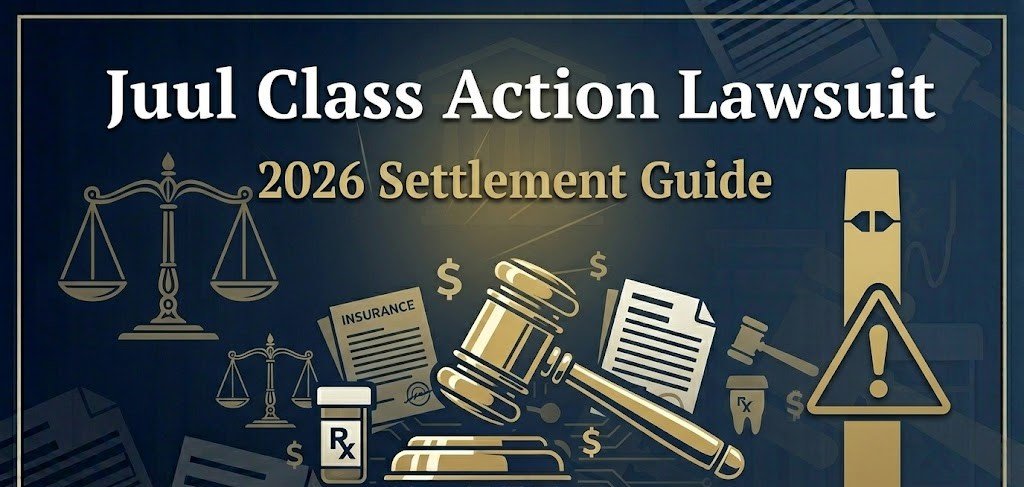
JUUL has already agreed to pay roughly $1.7 billion in combined settlements across multiple tracks. The largest resolved settlements involve state attorneys general and school districts, while many individual personal injury cases are still pending.
Here is what has been finalized:
The $438.5 million multistate attorney general settlement was announced in 2022. It involved 33 states and one territory. JUUL agreed to strict marketing restrictions on top of the payout.
Minnesota reached its own separate deal worth $255 million in 2023. That was the largest single-state settlement against JUUL. Other states like New York, California, and Illinois have also reached individual agreements.
School districts across the country settled for a combined amount reported at approximately $300 million. These settlements compensated districts for the cost of installing vape detectors, hiring counselors, and running anti-vaping education programs.
| Settlement Track | Approximate Amount | Status |
|---|---|---|
| Multistate AG Settlement (33 states) | $438.5 million | Finalized |
| Minnesota AG Settlement | $255 million | Finalized |
| Other Individual State Settlements | $500+ million combined | Mostly finalized |
| School District Settlements | ~$300 million | Distribution ongoing |
| Individual Personal Injury Claims | TBD | Many still pending |
Individual personal injury lawsuits are the biggest wildcard. JUUL has settled some quietly, but many remain active. The terms of individual settlements are often confidential.
Juul Settlement Payout: How Much Money Can You Get?
Your juul settlement payout depends entirely on which category of plaintiff you fall into and how severe your injuries are. Individual payouts could range from a few hundred dollars to well over $100,000 for serious health claims.
For the state attorney general settlements, the money goes to state programs. Individual consumers in those states typically do not receive direct checks. The funds are used for youth vaping prevention, education, and enforcement programs.
School districts that joined the class settlement received payouts based on enrollment size and documented vaping-related expenses. Some districts received tens of thousands of dollars. Larger districts received significantly more.
Individual personal injury claims are where the big numbers come in. Cases involving severe nicotine addiction, lung damage, seizures, or other documented health injuries can carry high settlement values.
| Claim Type | Estimated Payout Range |
|---|---|
| Minor nicotine addiction (individual) | $5,000 to $25,000 |
| Moderate health effects (individual) | $25,000 to $100,000 |
| Severe lung injury or seizures | $100,000 to $500,000+ |
| Wrongful death claims | $500,000 to $1 million+ |
| School district claims | $10,000 to $500,000+ |
These numbers are estimates based on reported settlements and attorney projections. Actual amounts vary based on medical documentation, age at time of use, and length of JUUL product use.
Key Takeaway: JUUL has paid over $1.7 billion so far, with individual personal injury claims potentially worth $5,000 to over $1 million depending on the severity of documented health damage.
Juul Lawsuit Update for 2026: Where Things Stand Now
As of 2026, the juul class action lawsuit is in a transitional phase. Most large institutional settlements have been finalized, but individual personal injury cases continue to move through the courts.
The MDL in Northern California still has active cases on its docket. Judge Orrick has been pushing for resolution of remaining claims. Several bellwether trials were scheduled to help both sides gauge the strength of individual cases.
JUUL Labs itself underwent significant corporate changes. The company has downsized its workforce, pulled most flavored pods from the U.S. market, and faces an uncertain future with the FDA. Its parent company, Altria Group, has distanced itself from the brand after writing down billions in losses on its original investment.
Here’s what to watch in 2026:
- Bellwether trial outcomes that could set the tone for remaining individual settlements
- New filing windows that may open for claimants who missed earlier deadlines
- Distribution of school district settlement funds that are still being processed
- Potential additional state AG actions from states that did not join the original multistate deal
The litigation is not dead. It’s just shifted from the headline-grabbing phase to the grinding resolution phase. If you have a pending claim, your case is likely moving through discovery or settlement negotiations right now.
Juul Class Action Settlement Amount by Category
The total juul class action settlement amount across all categories exceeds $1.7 billion, but that number tells only part of the story. The money is split across very different types of claims, and each category has its own payout structure.
State AG settlements account for the largest chunk. These agreements focus on public health spending, not individual payouts. The money funds vaping prevention campaigns, school health programs, and enforcement against underage sales.
School district settlements are the second major bucket. Over 700 districts filed claims. The settlement administrator divided funds based on formulas that considered student population, documented incidents, and spending on anti-vaping measures.
Individual settlements are handled case by case. There is no single “class action check” coming to every JUUL user. You need to have filed an individual claim or joined specific litigation to receive direct compensation.
| Category | Total Amount | Who Receives It | Direct to Individuals? |
|---|---|---|---|
| State AG Settlements | ~$1.2 billion combined | State governments | No |
| School District Settlements | ~$300 million | School districts | No |
| Individual Injury Claims | Varies per case | Individual plaintiffs | Yes |
| Tribal Nation Claims | Undisclosed | Tribal governments | No |
The distinction matters. Many people assume they’ll get a check simply because they bought JUUL products. That is not how this works. Only individual claimants with active cases or specific claim forms filed will receive personal payouts.
Who Qualifies for the Juul Lawsuit?
You may qualify for the juul lawsuit if you used JUUL products and suffered health consequences, or if you are a parent of a minor who became addicted. Eligibility depends on your specific situation, the type of claim, and the jurisdiction where you file.
The broadest group of eligible plaintiffs includes:
- Individuals who purchased and used JUUL products and developed nicotine addiction
- Minors (or now young adults) who started using JUUL as teenagers
- Parents or guardians filing on behalf of children who used JUUL
- People who suffered specific health injuries like lung damage, seizures, respiratory problems, or cardiovascular issues linked to JUUL use
You do not qualify for a direct payout from the state AG settlements simply because you bought JUUL products. Those funds go to government programs. For individual compensation, you need to have an active personal injury or product liability claim.
| Qualifier | Eligible? |
|---|---|
| Used JUUL and became addicted | Likely yes (individual claim) |
| Minor who used JUUL | Yes (filed by parent/guardian) |
| Suffered lung injury from JUUL | Yes (strong individual claim) |
| Bought JUUL once, no health issues | Unlikely for individual payout |
| School district with vaping costs | Yes (school district track) |
Proof of purchase is helpful but not always required. Medical records, school disciplinary records, and testimony about addiction are often the most important evidence.
Key Takeaway: Individual JUUL users who suffered addiction or health problems can qualify for direct compensation, but simply buying the product once without health effects is probably not enough for a personal payout.
Juul Lawsuit Eligibility Requirements Explained
Juul lawsuit eligibility comes down to three main factors: what you used, when you used it, and what happened to your health. Each factor plays a role in determining whether your claim is viable.
Factor 1: Product Use. You must have used JUUL-branded e-cigarette products. This includes the JUUL device and any JUUL-branded pods. Using a competitor’s vape product does not qualify you for this specific litigation, although separate lawsuits exist against other manufacturers.
Factor 2: Timeframe. Most claims focus on JUUL use during the period when the company was actively marketing to young people, roughly 2015 through 2022. Claims from use during this window are strongest. Use after JUUL pulled flavored pods and changed its marketing carries less legal weight.
Factor 3: Documented Harm. You need evidence of harm. This can include:
- Medical records showing nicotine addiction diagnosis
- Hospital visits for vaping-related lung injury (EVALI)
- Documentation of seizures or neurological symptoms
- Records of substance abuse treatment
- School records showing vaping-related discipline
| Eligibility Factor | What You Need |
|---|---|
| Product Used | JUUL-branded device and/or pods |
| Time Period | Primarily 2015 to 2022 |
| Health Impact | Documented addiction, injury, or illness |
| Age at Use | Stronger claims for minors at time of first use |
| Proof | Medical records, purchase history, testimony |
Minors who started using JUUL have the strongest claims. The entire basis of the lawsuit centers on JUUL’s alleged targeting of underage users. A 14-year-old who got hooked on mango pods in 2018 has a very different case than a 40-year-old who switched from cigarettes to JUUL voluntarily.
How to File a Juul Lawsuit Claim
Filing a juul lawsuit claim in 2026 typically requires working with an attorney who handles mass tort or product liability cases. You cannot simply fill out an online form and wait for a check. The process involves real legal work.
Here is the general step-by-step process:
- Step 1: Gather your evidence. Pull together medical records, any purchase receipts or bank statements, and a timeline of your JUUL use.
- Step 2: Contact a mass tort attorney. Many firms handle JUUL cases on a contingency basis, meaning you pay nothing upfront. They take a percentage of your settlement.
- Step 3: Your attorney files your claim. This may be an individual lawsuit or an addition to the existing MDL proceedings.
- Step 4: Discovery and case building. Your legal team compiles your medical history, deposition testimony, and evidence of damages.
- Step 5: Settlement negotiation or trial. Most cases settle before trial. If they don’t, your case may go before a jury.
| Filing Step | What Happens | Your Role |
|---|---|---|
| Initial Consultation | Attorney reviews your case | Share your story and records |
| Case Filing | Formal complaint filed in court | Sign retainer agreement |
| Discovery | Evidence exchange between parties | Provide medical records, testimony |
| Negotiation | Settlement discussions | Attorney handles this |
| Resolution | Settlement or trial verdict | Receive payout if successful |
Don’t fall for websites that promise a quick payout just for filling in your name and email. Legitimate JUUL claims require real legal representation and documented evidence of harm.
Juul Lawsuit Deadline: Key Dates You Need to Know
The juul lawsuit deadline depends on your state’s statute of limitations for product liability or personal injury claims. There is no single national deadline, and timing varies significantly by location.
Most states have a statute of limitations of two to three years from the date you discovered (or should have discovered) your injury. For minors, the clock often does not start until they turn 18. This means some young adults who used JUUL as teenagers in 2018 or 2019 may still have time to file.
Some key timing considerations:
- State AG settlements: Already finalized. No action needed from individual consumers.
- School district settlements: Most filing windows have closed, but distribution is ongoing.
- Individual claims: Deadlines vary by state. Some windows may still be open in 2026.
| State Example | Statute of Limitations | Notes |
|---|---|---|
| California | 2 years from discovery | Tolled for minors until age 18 |
| Texas | 2 years | Strict deadline |
| New York | 3 years | Discovery rule may apply |
| Florida | 4 years (products liability) | Recently changed; verify current law |
| Illinois | 2 years | Minor tolling applies |
Do not assume you have missed the deadline. Talk to an attorney who can evaluate your specific timeline. Courts have granted exceptions in cases where plaintiffs did not know about the connection between their injuries and JUUL use until recently.
Key Takeaway: There is no single national deadline for JUUL lawsuit claims. Your state’s statute of limitations controls your filing window, and minors often get extra time because the clock starts when they turn 18.
Juul Settlement Payment Date: When Will Checks Arrive?
Juul settlement payment dates vary depending on the type of claim and which settlement track you belong to. Some payments have already gone out, while others may not arrive until late 2026 or beyond.
State AG settlement funds have been distributed to state governments. Those payments are already flowing into public health programs. If you were hoping for a personal check from those deals, that is not how they work.
School district settlement payments began rolling out in 2024 and 2025. Some districts have received their full allocations. Others are still waiting on final distribution from the settlement administrator.
Individual claimants face the longest wait. If your case has been settled, payment typically arrives 60 to 120 days after a signed release and court approval. If your case is still in negotiation, you could be waiting well into 2026 or 2027.
| Settlement Track | Payment Status | Expected Timeline |
|---|---|---|
| State AG Settlements | Distributed | Already paid to states |
| School District Settlements | Ongoing | 2024 through 2026 |
| Individual Settled Cases | Case by case | 60 to 120 days after signing |
| Individual Pending Cases | Not yet | 2026 to 2027+ |
Think of it like waiting for a tax refund, except the IRS is a federal court and the processing time is measured in months, not weeks. Patience is genuinely required here.
Juul MDL Update: Multidistrict Litigation Progress
The juul MDL (Multidistrict Litigation No. 2913) remains active in the Northern District of California under Judge William H. Orrick III. The MDL has served as the central hub for coordinating thousands of individual lawsuits against JUUL Labs.
By 2026, the MDL has moved past its most intense pretrial phase. Discovery has largely been completed. Key documents from JUUL’s internal communications, marketing strategies, and product development have been produced and reviewed.
Bellwether trials are the next critical milestone. These are representative cases selected to test legal theories in front of a jury. The outcomes of bellwether trials often determine whether remaining cases settle quickly or drag on for years.
Key MDL developments include:
- Pretrial rulings that allowed certain marketing and addiction claims to proceed
- Expert witness challenges under Daubert standards, with mixed results for both sides
- Settlement negotiations running parallel to trial preparation
- JUUL’s financial restructuring raising questions about the company’s ability to pay future judgments
| MDL Milestone | Status |
|---|---|
| MDL Consolidation | Completed (2019) |
| Discovery Phase | Substantially complete |
| Bellwether Case Selection | In progress |
| Bellwether Trials | Scheduled for 2026 |
| Global Settlement Talks | Ongoing |
The MDL structure helps efficiency, but it also means cases move slowly. If your case is part of the MDL, your attorney should be able to tell you where it sits in the queue.
Juul Vaping Lawsuit: Health Claims and Evidence
The juul vaping lawsuit cases rest on a foundation of health claims tied to nicotine addiction, respiratory injury, and neurological damage. The evidence connecting JUUL use to these health problems has grown substantially since the first cases were filed.
The most common health claims in JUUL litigation include:
- Nicotine addiction: JUUL pods contained significantly higher nicotine concentrations than many competitors. A single pod was often compared to an entire pack of cigarettes.
- Lung injuries (EVALI): Some JUUL users developed e-cigarette or vaping product use-associated lung injury.
- Seizures: The FDA received hundreds of reports of seizures potentially linked to e-cigarette use, with JUUL products frequently cited.
- Cardiovascular problems: Elevated heart rate, high blood pressure, and other cardiovascular symptoms linked to heavy nicotine intake.
- Mental health effects: Anxiety, irritability, and concentration problems associated with nicotine dependence in adolescents.
Internal JUUL documents revealed during discovery showed the company was aware of its product’s addictive potential. Marketing materials specifically referenced younger demographics. Some internal communications used phrases that suggested the company knew teenagers were a significant part of its customer base.
| Health Claim | Evidence Strength | Frequency in Cases |
|---|---|---|
| Nicotine addiction | Very strong | Extremely common |
| Lung injury (EVALI) | Moderate to strong | Moderate |
| Seizures | Moderate | Less common |
| Cardiovascular issues | Moderate | Growing |
| Mental health impact | Moderate | Common in youth cases |
The health evidence is backed by CDC and FDA data, peer-reviewed medical studies, and thousands of adverse event reports. This is not speculative litigation. Real harm has been documented extensively.
Key Takeaway: JUUL vaping health claims are backed by internal company documents, FDA data, and medical research showing addiction, lung injury, seizures, and cardiovascular damage tied to the product’s high nicotine content.
Is the Juul Lawsuit Still Open in 2026?
Yes, the juul lawsuit is still open in 2026 for certain types of claims. While the major state AG and school district settlements have been finalized, individual personal injury claims continue to be filed and resolved.
The MDL is still active. New cases can potentially be added if they fall within the applicable statute of limitations. The court has not issued a blanket closure of new filings.
That said, the window is narrowing. Most states have statutes of limitations of two to three years. If you used JUUL and discovered your injury years ago but never took action, your time may be running out.
Here’s how to determine if you can still file:
- Check your state’s statute of limitations for product liability or personal injury
- Calculate when you first discovered your injury or when you reasonably should have known
- Account for minor tolling if you were under 18 at the time of use
- Contact an attorney immediately if you are close to the deadline
| Question | Answer |
|---|---|
| Is the MDL still active? | Yes |
| Can new cases be filed? | Yes, if within statute of limitations |
| Are school district claims still open? | Mostly closed |
| Are state AG claims still open? | Finalized |
| Are individual injury claims still open? | Yes, subject to state deadlines |
Don’t assume the door has closed. But don’t wait another year to find out, either.
Juul Lawsuit Compensation Amounts by Injury Type
Juul lawsuit compensation amounts vary dramatically based on the type and severity of your injury. A teenager who became addicted but recovered fully will receive far less than someone who suffered permanent lung damage.
Attorneys in this space categorize claims into tiers. Each tier corresponds to the level of harm, medical evidence, and long-term impact on the plaintiff’s life.
Tier 1: Nicotine addiction with recovery. These are the most common claims. The plaintiff used JUUL, became addicted, and eventually quit or reduced use. Settlement values for these cases typically fall in the $5,000 to $30,000 range.
Tier 2: Addiction with ongoing health effects. The plaintiff suffered lasting health consequences like chronic respiratory problems, ongoing addiction requiring treatment, or documented mental health impacts. These cases often settle for $30,000 to $150,000.
Tier 3: Severe injury. Lung damage requiring hospitalization, seizures, or significant cardiovascular events. These cases can reach $150,000 to $500,000 or more.
Tier 4: Catastrophic injury or death. Cases involving permanent disability, organ damage, or wrongful death. Settlements in this category can exceed $500,000 and may reach into the millions.
| Injury Tier | Description | Estimated Range |
|---|---|---|
| Tier 1 | Addiction, full recovery | $5,000 to $30,000 |
| Tier 2 | Addiction with lasting effects | $30,000 to $150,000 |
| Tier 3 | Severe injury (hospitalization) | $150,000 to $500,000+ |
| Tier 4 | Catastrophic or fatal | $500,000 to $1 million+ |
Your medical records are the single most important factor. Without documentation of diagnosis, treatment, and ongoing effects, your case value drops significantly regardless of what actually happened to you.
Juul School District Settlement Breakdown
The juul school district settlement resolved claims from over 700 school districts nationwide. These districts argued that JUUL’s marketing to teens created a vaping epidemic that forced schools to spend money on prevention, enforcement, and health services.
The total school district settlement pool was approximately $300 million. This money went directly to districts, not to individual students or families.
Districts used the funds for specific purposes:
- Installing vape detection sensors in bathrooms and locker rooms
- Hiring additional counselors to address nicotine addiction among students
- Creating anti-vaping curriculum and education programs
- Covering costs of disciplinary proceedings and suspensions related to vaping
- Training staff to recognize signs of vaping and nicotine dependence
| District Size | Typical Allocation | Common Uses |
|---|---|---|
| Small (under 5,000 students) | $10,000 to $50,000 | Detectors, education materials |
| Medium (5,000 to 20,000) | $50,000 to $200,000 | Counseling, detectors, programs |
| Large (20,000+) | $200,000 to $1 million+ | Comprehensive vaping prevention |
The settlement also required JUUL to make operational changes. The company agreed not to market to youth, not to use flavors attractive to minors, and not to sell products in ways that make them accessible to underage buyers.
If you are a parent wondering whether your child’s school received money, contact your district’s central administration. Settlement funds were distributed directly to the district, not to individual families.
Key Takeaway: Over 700 school districts split roughly $300 million from JUUL, using the funds for vape detectors, counseling, and prevention programs. Individual families do not receive direct payments from this settlement track.
Juul Settlement Tax Implications: Is Your Payout Taxable?
Juul settlement tax implications depend on what your payout compensates you for. Under IRS rules, settlement payments for physical injuries or physical sickness are generally not taxable. Payments for other types of damages may be.
Here is how it breaks down. If your JUUL settlement compensates you for physical harm like lung damage, seizures, or other bodily injuries, that money is typically excluded from taxable income under IRS Section 104(a)(2).
If part of your settlement covers emotional distress that did not originate from a physical injury, that portion is usually taxable as ordinary income. Punitive damages, if any are awarded, are always taxable.
The tricky part with JUUL cases is that nicotine addiction itself sits in a gray area. Some attorneys argue addiction is a physical condition. The IRS could potentially disagree. How your settlement agreement characterizes the payment matters enormously.
| Payment Type | Taxable? |
|---|---|
| Compensation for physical injury (lung damage, seizures) | Generally no |
| Compensation for physical sickness (addiction as physical condition) | Possibly no |
| Emotional distress from physical injury | Generally no |
| Emotional distress without physical injury | Yes |
| Punitive damages | Yes |
| Lost wages component | Yes |
| Attorney fees (contingency) | Complex; depends on structure |
Quick Tip: Ask your attorney to structure your settlement agreement so that compensation is clearly allocated to physical injury categories whenever possible. This allocation can make the difference between owing the IRS thousands and owing nothing.
Keep records of everything. Save your settlement agreement, any court orders approving the settlement, and documentation of your physical injuries. You may need these if the IRS questions your tax return.
Juul Lawsuit Funding: Getting Cash While You Wait
Juul lawsuit funding, also called pre-settlement funding or lawsuit loans, gives claimants access to cash while their case is pending. If you have an active JUUL claim but need money now, this is an option worth understanding.
Pre-settlement funding is not a traditional loan. It is a cash advance against your expected settlement. If you lose your case, you typically owe nothing. The funding company takes the risk.
Here is how it works:
- Step 1: You apply with a lawsuit funding company and provide your case details.
- Step 2: The company contacts your attorney to review your case’s strength and estimated value.
- Step 3: If approved, you receive a lump sum, usually within 24 to 48 hours.
- Step 4: When your case settles, the funding company is repaid from your settlement proceeds, plus fees.
The cost is the catch. Lawsuit funding companies charge fees that can range from 15% to 60% annualized. On a case that takes two years to resolve, the total repayment amount can be substantial.
| Funding Detail | Typical Terms |
|---|---|
| Advance Amount | $1,000 to $100,000 |
| Approval Time | 24 to 48 hours |
| Repayment | From settlement proceeds only |
| If You Lose | You owe nothing |
| Fees | 15% to 60% annualized |
| Risk | Significantly reduces your net payout |
Consider this option carefully. Getting $10,000 today might feel necessary, but if it costs you $20,000 out of your settlement in two years, that is a painful trade. Talk to your attorney before signing anything with a funding company.
Key Takeaway: Pre-settlement funding gives JUUL claimants cash while waiting, but high fees can eat a large portion of your eventual payout. Only use this option if you truly need the money and understand the full cost.
Frequently Asked Questions
How much is the Juul class action lawsuit settlement worth?
The combined JUUL settlements across all tracks total over $1.7 billion.
This includes $438.5 million from the multistate AG settlement, $255 million from Minnesota alone, and roughly $300 million from school district claims.
Individual personal injury settlements vary from $5,000 to over $1 million based on injury severity.
Can I still file a Juul lawsuit claim in 2026?
Yes, you can still file an individual JUUL claim in 2026 if you are within your state’s statute of limitations.
Most states allow two to three years from the date of injury discovery.
Minors often get additional time because the clock typically starts at age 18.
Who qualifies for the Juul lawsuit payout?
You may qualify if you used JUUL products and suffered nicotine addiction, lung injury, seizures, or other health problems.
Parents can file on behalf of minors who used JUUL.
Simply purchasing the product without documented health effects is unlikely to qualify for individual compensation.
When will Juul settlement checks be mailed?
State AG settlement funds have already been distributed to state governments.
School district payments are rolling out through 2026.
Individual claimants with settled cases typically receive checks 60 to 120 days after signing a release agreement.
Do I have to pay taxes on my Juul settlement money?
Settlement payments for physical injuries are generally not taxable under IRS Section 104(a)(2).
Payments for emotional distress without physical injury, punitive damages, and lost wages may be taxable.
How your settlement agreement categorizes the payment determines its tax treatment.
The JUUL class action lawsuit remains one of the most significant product liability cases in American history. If you used JUUL and suffered health consequences, 2026 could be a critical year for your claim.
Check your state’s filing deadline. Gather your medical records. Talk to a mass tort attorney who handles JUUL cases.
The settlements are real. The money is there. But it only goes to people who take action before their window closes.