The Capital One lawsuit 2026 story is still unfolding. Multiple class action cases against Capital One are either distributing funds or approaching final resolution this year.
If you were affected by the 2019 data breach or hit with hidden fees, you may still have a shot at compensation. Over 106 million people had their personal data exposed. The settlement fund reached $190 million.
This article breaks down every active case, who qualifies, payout amounts, application steps, and deadlines. Some of these windows are closing fast.
You will learn exactly how to file, what to expect, and when the money arrives. The details matter, and missing a deadline could mean losing your share.
Capital One Lawsuit 2026: What You Need to Know
The Capital One lawsuit 2026 refers to ongoing class action cases and settlement distributions connected to Capital One Financial Corporation. Several legal actions filed in prior years are reaching final payout stages in 2026, while new claims may emerge.
The biggest case remains the 2019 data breach. A former Amazon Web Services employee named Paige A. Thompson accessed personal records of roughly 106 million Capital One customers and applicants. Names, addresses, phone numbers, dates of birth, Social Security numbers, and bank account numbers were all exposed.
Capital One agreed to a $190 million class action settlement to resolve claims from affected customers. The case was filed in the U.S. District Court for the Eastern District of Virginia under Case No. 1:19-md-02915.
Beyond the data breach, separate lawsuits target Capital One over alleged hidden fees, misleading interest rate practices, and improper account handling. In 2026, consumers need to track multiple cases.
| Detail | Info |
|---|---|
| Primary Case | Data Breach Class Action |
| Settlement Fund | $190 million |
| Affected Individuals | ~106 million |
| Court | U.S. District Court, Eastern District of Virginia |
| Case Number | 1:19-md-02915 |
| Settlement Year | Originally approved 2022, distributions ongoing into 2026 |
Think of this like a slow-moving river. The case started years ago, but the water (your payout) is still flowing in 2026.
Capital One Class Action Lawsuit 2026 Overview
The Capital One class action lawsuit 2026 involves multiple consolidated legal claims brought on behalf of millions of affected consumers. Class action status means individual customers don’t have to sue alone.
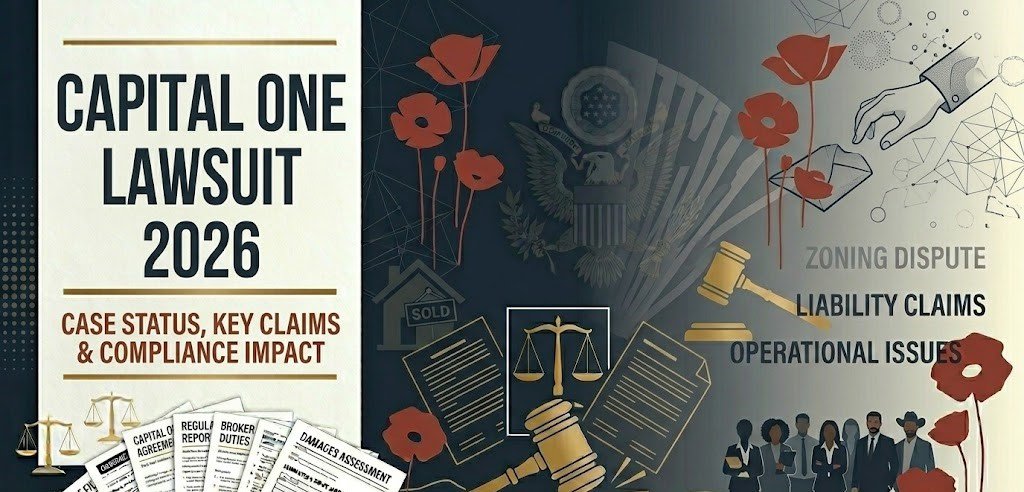
In a class action, one or more plaintiffs represent an entire group (called a “class”) of people with similar claims. For the data breach case, the class includes anyone in the United States or Canada whose personal information Capital One held at the time of the breach.
The breach happened between March 2019 and July 2019. Capital One publicly disclosed the incident on July 29, 2019. Within weeks, lawsuits began pouring in from across the country.
The Judicial Panel on Multidistrict Litigation consolidated dozens of individual lawsuits into one proceeding. Judge Anthony Trenga oversaw the case in Virginia.
Separate class actions related to banking fees and practices have also been filed against Capital One. Some of these are in earlier stages and may produce their own settlements in 2026.
- Data breach class action: Largest case, $190 million fund
- Hidden fees class action: Targets overdraft and interest charges
- Account handling claims: Related to improper closures and credit reporting
- Employment-related suits: Wage and discrimination claims (smaller scope)
Each case has its own timeline, its own eligibility rules, and its own payout structure.
Capital One Data Breach Settlement 2026 Explained
The Capital One data breach settlement 2026 is the continuation of a court-approved resolution that established a $190 million fund for affected customers. Settlement distributions started after final approval and are expected to continue through 2026.
Here is what the settlement covers. Class members can claim reimbursement for documented losses caused by the breach. That includes out-of-pocket expenses like credit monitoring fees, bank fees from fraud, and time spent dealing with identity theft.
The settlement also provides free identity defense services for class members. These services include credit monitoring, dark web scanning, and identity theft insurance through a provider selected by the settlement administrator.
Capital One separately paid an $80 million civil penalty to the Office of the Comptroller of the Currency for failing to establish proper risk management. That penalty went to the federal government, not to consumers.
| Settlement Component | Details |
|---|---|
| Total Fund | $190 million |
| Documented Loss Claims | Up to $25,000 per person |
| Time Spent (Breach Response) | Up to $25/hour, max 15 hours |
| Identity Defense Services | Free for eligible class members |
| OCC Penalty (separate) | $80 million to federal government |
The $190 million fund sounds massive. But split among millions of claimants, individual payouts vary widely based on documented losses.
Key Takeaway: Capital One’s data breach exposed over 106 million people, and the $190 million settlement fund is still distributing payments into 2026, with individual claims worth up to $25,000 for documented losses.
Capital One Lawsuit Status Update for 2026
The Capital One lawsuit status in 2026 shows that the primary data breach settlement has received final court approval and is in its distribution phase. Late-stage claims processing and supplemental payments are the main activities happening now.
After Judge Trenga granted final approval, the settlement administrator began processing claims. Some claimants received initial payments, but delays have been common. That is typical for massive class actions with millions of eligible members.
Appeal periods have closed for the main data breach case. No successful appeal overturned the settlement terms. That means the fund is locked in and payouts are proceeding.
For the hidden fees cases, the status is more fluid. Some of these claims are still in pre-trial motions or early settlement negotiations as of 2026. No final settlement has been publicly announced for all fee-related claims.
- Data breach case: Final approval granted; distribution phase active
- Hidden fees cases: Mixed status; some in negotiation, others in litigation
- OCC penalty: Fully paid by Capital One
- Criminal case: Paige Thompson was convicted in June 2022
If you filed a claim years ago and haven’t heard back, that doesn’t mean your claim was denied. Processing millions of claims takes years.
Capital One Lawsuit Eligibility in 2026
Capital One lawsuit eligibility in 2026 depends on which specific case you are part of and whether your personal information was compromised or you were charged improper fees. The data breach settlement has the broadest eligibility.
For the data breach case, you are eligible if Capital One held your personal data between approximately 2005 and early 2019. This includes people who applied for Capital One credit cards, auto loans, or bank accounts during that period.
You do not need to prove that your data was actually misused. Simply being part of the affected group makes you a class member. However, the amount you receive depends on whether you can document actual harm.
For hidden fees lawsuits, eligibility typically requires that you were a Capital One customer who was charged the specific fee type at issue. This might include overdraft fees, interest calculation disputes, or late fee practices.
| Eligibility Factor | Data Breach Case | Hidden Fees Cases |
|---|---|---|
| Time Period | 2005 to 2019 | Varies by case |
| Must Prove Harm | No (for basic claim) | Typically yes |
| Customer Type | Applicants and customers | Account holders |
| Geographic Scope | U.S. and Canada | Usually U.S. only |
| Documentation Needed | For enhanced payout | For all claims |
If you received a notification letter or email from the settlement administrator, you are almost certainly eligible.
Who Qualifies for the Capital One Lawsuit in 2026
Anyone whose personal information was part of the Capital One data breach qualifies for the 2026 settlement distributions. You qualify even if you never became a Capital One customer, as long as you applied for a product and your data was stored.
Here is the full list of people who qualify:
- Anyone who applied for a Capital One credit card between 2005 and early 2019
- Capital One credit card holders during that period
- Capital One bank account holders (checking, savings)
- Capital One auto loan applicants and borrowers
- Canadian residents who applied for Capital One products during the same timeframe
- Anyone who received a direct notification from the settlement administrator
The data that was exposed included Social Security numbers, names, addresses, dates of birth, self-reported income, credit scores, credit limits, balances, and payment history. Some bank account numbers were also taken.
Roughly 100 million people in the U.S. and 6 million in Canada were affected. That makes this one of the largest banking data breaches in history.
You don’t need a lawyer to participate. The class action covers you automatically if you fall within the defined class. Filing a claim is the step that gets you paid.
Key Takeaway: You qualify for the Capital One lawsuit in 2026 if Capital One held your personal data between 2005 and 2019, even if your information was never actually stolen or misused.
Capital One Settlement Payout in 2026
The Capital One settlement payout in 2026 will vary from person to person based on documented losses and the type of claim filed. Base payouts for class members without documented losses are expected to be modest, while those with proven damages can receive significantly more.
The settlement created two main categories of compensation. The first covers people who spent time and money responding to the breach. The second covers people who suffered actual identity theft or fraud.
For time spent dealing with the breach, the settlement pays $25 per hour for up to 15 hours. That comes out to a maximum of $375 just for your time. You need to describe what you did, like monitoring accounts, placing fraud alerts, or calling banks.
For documented out-of-pocket losses, you can claim up to $25,000. These losses must be “fairly traceable” to the breach. Examples include unreimbursed fraud charges, fees paid for credit monitoring, and costs of freezing or unfreezing credit.
| Payout Type | Amount | Proof Required |
|---|---|---|
| Time Spent | $25/hour, up to 15 hours ($375 max) | Self-certification with description |
| Out-of-Pocket Losses | Up to $25,000 | Receipts, statements, documentation |
| Identity Defense Services | Free enrollment | Claim form only |
| Base Payment (no losses) | Varies, likely $5 to $50 | Claim form only |
The actual amount you receive depends on how many people filed valid claims. The more claimants, the smaller each share becomes. That is how class action math works.
Capital One Settlement Amount Per Person in 2026
The Capital One settlement amount per person in 2026 is expected to range from approximately $5 to $25,000, depending entirely on the strength of your individual claim. Most people without documented losses will receive on the lower end.
Let’s put this in perspective. If 10 million people file claims against a $190 million fund, and a big chunk goes to attorneys’ fees (typically 25% to 33%), the remaining pool for claimants shrinks considerably. After legal costs, the fund available for distribution might be closer to $125 to $140 million.
Divide that among millions of claimants. If everyone files a bare-minimum claim, payouts could land in the $5 to $25 range per person. That’s the reality of most large class actions, similar to getting a small refund check you weren’t expecting.
People with strong documented losses will fare much better. If you can prove you paid for credit monitoring, had fraudulent charges, or spent hours resolving identity theft, your payout could be in the hundreds or thousands of dollars.
- Minimal claim (no documentation): $5 to $25 estimated
- Moderate claim (some time, some expenses): $50 to $500 estimated
- Strong claim (documented fraud or identity theft): $1,000 to $25,000
The settlement administrator reviews each claim individually. Higher-value claims require more evidence. Keep every receipt, statement, and record related to breach-related expenses.
Capital One Lawsuit 2026 Application Process
The Capital One lawsuit 2026 application process requires completing a claim form through the official settlement administrator and submitting any supporting documentation. You can apply online or by mail.
The claim form asks for basic personal information to verify your identity and class membership. You will need your full name, current mailing address, email address, and the last four digits of your Social Security number.
After verifying your identity, you select the type of compensation you are seeking. The form has different sections for time spent, out-of-pocket losses, and identity defense enrollment. Fill out every section that applies to you.
For documented losses, you will need to upload or attach proof. Acceptable documentation includes bank statements showing fraudulent charges, receipts for credit monitoring services, and written descriptions of time spent resolving issues.
Steps to apply:
- Visit the official settlement claims portal (search for the Capital One Settlement Administrator website)
- Create an account or enter your notification ID from the letter you received
- Complete the claim form with accurate personal details
- Select your compensation categories
- Upload supporting documents for any financial losses
- Review your submission for errors
- Submit and save your confirmation number
The entire process takes about 15 to 30 minutes if you have your documents ready. Don’t rush through it; errors can delay your payout.
Key Takeaway: The Capital One lawsuit application process in 2026 can be completed in under 30 minutes online, but having your documentation organized beforehand will make your claim stronger and your payout larger.
Capital One Lawsuit 2026 Application Online
The Capital One lawsuit 2026 application online is available through the official claims portal managed by the court-appointed settlement administrator. Filing online is the fastest and most reliable way to submit your claim.
Online filing offers several advantages over mailing a paper form. Your submission is timestamped automatically, you receive instant confirmation, and you can check your claim status later through the same portal. Paper claims risk getting lost in the mail or arriving after a deadline.
When you access the online portal, look for a unique claim ID. If you received a notification letter from the settlement administrator, it contains this ID. The ID links your online submission to your class membership record.
If you never received a notification but believe you are eligible, you can still file. The online form includes an option for people who did not receive direct notice. You will need to provide additional verification, like old Capital One account numbers.
| Online vs. Mail Filing | Online | |
|---|---|---|
| Speed | Instant submission | Days to weeks |
| Confirmation | Immediate | None until processed |
| Status Tracking | Yes, through portal | No |
| Document Upload | Digital uploads | Physical copies |
| Risk of Loss | Very low | Moderate |
| Recommended | Yes | Only if no internet access |
File online if you possibly can. It saves time and protects your claim.
How to File a Capital One Lawsuit Claim in 2026
Filing a Capital One lawsuit claim in 2026 requires gathering your documents, completing the official claim form, and submitting it before the applicable deadline. The process is straightforward but detail matters.
Before you sit down to file, collect everything you might need. That includes old Capital One statements, any notification letters you received about the breach, receipts for credit monitoring services, records of fraudulent transactions, and notes about time you spent dealing with breach fallout.
Open the claims portal and start with the basics. Enter your name exactly as it appeared on your Capital One account. Mismatched names cause processing delays. Use the same email address where you received breach notifications if possible.
Next, describe your losses. Be specific. Don’t just write “I spent time on this.” Write “I spent 3 hours on July 15, 2020, calling my bank to dispute two fraudulent charges totaling $487.” The more specific you are, the better your claim looks.
Common mistakes to avoid:
- Filing duplicate claims (this can get both rejected)
- Leaving the documented losses section blank when you have real expenses
- Using a different name or address than what Capital One has on file
- Forgetting to save your confirmation number
- Waiting until the last day to file (portal traffic spikes cause crashes)
Submit your claim at least one week before any deadline. Technical issues on deadline day have caused people to miss their window in other class actions.
Capital One Lawsuit Deadline for 2026
The Capital One lawsuit deadline for 2026 depends on which specific case and claims window you are referencing. The original data breach settlement had a claims deadline, but supplemental distribution phases may have extended or reopened filing windows.
For the primary data breach settlement, the initial claims deadline passed in 2022. However, class action settlements sometimes reopen claims periods for late filers or for supplemental distribution rounds. Check the official settlement website for any 2026 reopening notices.
If new Capital One lawsuits reach settlement in 2026, they will have their own independent deadlines. Each case operates on its own court-approved schedule. A hidden fees settlement, for example, would have different dates than the data breach case.
| Deadline Type | Estimated Timing |
|---|---|
| Original Breach Claim Deadline | Passed (2022) |
| Supplemental Claims (if reopened) | Watch for 2026 announcements |
| Hidden Fees Lawsuits | TBD; depends on settlement approval |
| Objection Deadlines (new cases) | Typically 60 to 90 days after preliminary approval |
| Opt-Out Deadlines | Typically 60 to 90 days after preliminary approval |
Missing a deadline in a class action is like showing up to the airport after your flight left. There are no extensions. No exceptions. No second chances.
Set calendar reminders for any deadlines you find. Check the settlement website at least once a month for updates.
Key Takeaway: The original Capital One data breach claims deadline has passed, but 2026 may bring reopened filing windows or entirely new settlement deadlines from other Capital One lawsuits, so check the official claims portal regularly.
Is the Capital One Lawsuit Still Open in 2026
Yes, parts of the Capital One lawsuit are still active in 2026. The data breach settlement is in its distribution phase, meaning claims are being processed and payments are being sent. New lawsuits against Capital One related to other issues may also be open for new claimants.
The data breach case itself is technically “closed” in terms of the original filing window. But “closed” doesn’t mean “done.” The settlement administrator is still reviewing claims, issuing payments, and handling disputes. Some claimants are still waiting for their checks.
For newer lawsuits, particularly those involving hidden fees or interest rate practices, the litigation may be fully open. If a new settlement is reached in 2026, a fresh claims window will open for affected customers.
You can verify the status of any Capital One lawsuit by:
- Searching the settlement administrator’s official website
- Checking PACER (Public Access to Court Electronic Records) for case filings
- Looking for class action notice publications in major newspapers
- Monitoring consumer rights websites for settlement news
If you missed the original deadline, don’t give up entirely. Courts occasionally allow late claims under special circumstances, especially if you can show you never received proper notification.
Capital One Class Action Payout Timeline for 2026
The Capital One class action payout timeline for 2026 depends on when your specific claim was filed and where it stands in the processing queue. For the data breach case, payments are being distributed on a rolling basis, with some claimants receiving funds earlier than others.
Class action payouts rarely happen all at once. The process usually follows a predictable sequence, though the exact timing varies.
Typical payout timeline:
- Claim submission: You file your claim (already done for most data breach claimants)
- Claim review: Settlement administrator verifies your information (30 to 120 days)
- Deficiency notice: If your claim has errors, you get a notice to correct them (30 days to respond)
- Claim approval: Your claim is accepted and queued for payment
- Payment issuance: Check mailed or electronic payment sent
- Final distribution: Any remaining funds distributed pro rata to all approved claimants
| Phase | Estimated Duration |
|---|---|
| Claim Review | 30 to 120 days |
| Deficiency Correction | 30 days |
| Payment Processing | 60 to 180 days after approval |
| Final Distribution | 6 to 18 months after initial payments |
For the data breach case specifically, initial payments went out starting in late 2023 and 2024. Supplemental distributions could continue into mid to late 2026. Patience is required.
Capital One Settlement Check: When Will It Arrive in 2026
Your Capital One settlement check in 2026 could arrive at any point during the year if your claim has been approved and is in the payment queue. Most checks are mailed via standard USPS delivery and take 7 to 14 business days to arrive after issuance.
If you filed a claim and it was approved, the settlement administrator will send payment to the address you provided on your claim form. This is why keeping your mailing address updated is so important. Returned checks create significant delays.
Some settlements offer electronic payment options. If the Capital One settlement administrator provides direct deposit or digital payment, you may receive funds faster than those waiting for a paper check.
What to do if your check hasn’t arrived:
- Verify your mailing address with the settlement administrator
- Check your claim status on the online portal
- Contact the settlement administrator directly (phone and email available on the claims website)
- Allow at least 90 days from your claim approval before escalating concerns
- Do not cash checks from unknown sources claiming to be “Capital One settlement” payments (scams exist)
| Payment Method | Delivery Time |
|---|---|
| Paper Check | 7 to 14 business days after issuance |
| Electronic Payment | 3 to 5 business days after issuance |
| Re-issued Check (address error) | 30 to 60 additional days |
Keep an eye on your mailbox. Settlement checks sometimes look like junk mail and get thrown away accidentally.
Key Takeaway: Capital One settlement checks in 2026 are being mailed on a rolling basis; keep your address updated with the settlement administrator and allow 90 days after claim approval before worrying about delays.
Capital One Hidden Fees Lawsuit in 2026
The Capital One hidden fees lawsuit in 2026 involves separate legal claims alleging that Capital One charged customers undisclosed or misleading fees on credit cards, bank accounts, and loan products. These cases are distinct from the data breach litigation.
Consumers have filed complaints about several types of fees. Overdraft charges on checking accounts, unexpected interest calculations on credit card balances, and undisclosed foreign transaction fees have all been the subject of legal action.
One significant case involves allegations that Capital One charged “minimum interest charges” without properly disclosing them in cardholder agreements. Another focuses on how the bank calculated daily interest on credit cards, which plaintiffs say resulted in higher charges than advertised APR rates suggested.
As of 2026, some of these fee-related cases are in settlement discussions. Others remain in active litigation. If a settlement is reached, affected customers would receive direct notification.
Types of hidden fees at issue:
- Overdraft and insufficient funds fees
- Minimum interest charges on credit cards
- Daily interest calculation discrepancies
- Foreign transaction fees not clearly disclosed
- Late payment fee timing disputes
If you believe you were charged hidden fees by Capital One, save your account statements. Those documents become your evidence if a settlement opens for claims. Monthly statements from the relevant time period are the most valuable records you can hold onto.
Capital One Lawsuit Tax Implications in 2026
Capital One lawsuit settlement payments received in 2026 may be taxable depending on the type of compensation they represent. The IRS treats different categories of settlement income differently, and understanding the distinction matters for your tax return.
Generally, money you receive as reimbursement for actual losses is not taxable. If you spent $200 on credit monitoring and the settlement reimburses that $200, the IRS considers it a return of your own money. No tax owed.
Payments for emotional distress or lost time that don’t replace a specific financial loss are typically taxable as ordinary income. The $25/hour payment for time spent responding to the breach likely falls into this category.
If you receive a payment above $600, the settlement administrator is required to send you a Form 1099-MISC by January 31 of the following year. This form reports the payment to both you and the IRS.
| Payment Type | Taxable? | IRS Form |
|---|---|---|
| Reimbursement of actual expenses | Generally no | None typically issued |
| Payment for time spent | Likely yes | 1099-MISC if over $600 |
| Emotional distress (no physical injury) | Yes | 1099-MISC if over $600 |
| Identity defense services | Generally no | None |
| Interest on late payments | Yes | 1099-INT |
Talk to a tax professional before filing your 2026 return if you received settlement funds. The rules have nuances, and getting them wrong can trigger an IRS notice.
Capital One Settlement Funding Options in 2026
Capital One settlement funding in 2026 refers to pre-settlement or settlement advance services that allow claimants to access a portion of their expected payout before the check actually arrives. These services are available through third-party funding companies.
Settlement funding works like an advance against your future payment. A funding company reviews your claim, estimates your expected payout, and offers you a lump sum now (usually a fraction of the total). When your settlement check arrives, you repay the advance plus fees.
This option exists because class action payouts take a long time. If you need money now and you have an approved claim, funding can bridge the gap. But the costs can be steep.
Things to know about settlement funding:
- Funding companies charge fees, not interest (technically); however, the effective cost can be very high
- You are not guaranteed approval; the company assesses your claim’s value first
- If your claim is denied or reduced, some funding agreements say you owe nothing (non-recourse); others do not
- Read every word of the agreement before signing
- Typical advances range from 10% to 30% of your expected payout
| Funding Aspect | Details |
|---|---|
| Typical Advance | 10% to 30% of expected payout |
| Fee Structure | Varies widely; can be 15% to 60% of advance amount |
| Repayment | Deducted from your settlement check |
| Non-Recourse Option | Available from some companies (you owe nothing if claim fails) |
| Processing Time | 24 to 72 hours after approval |
| Risk | You may end up with significantly less than your full payout |
Settlement funding is a last resort. If you can wait for your check, waiting saves you money. Only use funding if you have an urgent financial need that can’t be met any other way.
Key Takeaway: Settlement funding for Capital One claims in 2026 gives you fast cash but at a high cost; treat it as a last resort and read every clause of the agreement before signing.
Frequently Asked Questions
How much money will I get from the Capital One lawsuit in 2026?
Most claimants without documented losses will receive between $5 and $25.
Those with proven expenses and time spent can receive $50 to $25,000.
Your actual amount depends on your documentation and the total number of approved claims.
Can I still file a claim for the Capital One settlement in 2026?
The original data breach claims deadline has passed.
However, supplemental claims windows may reopen in 2026, and new lawsuits could create fresh filing opportunities.
Check the official settlement administrator’s website regularly for updates.
How do I check my Capital One lawsuit claim status in 2026?
Log into the official settlement claims portal using the email or claim ID from your original filing.
Your status will show as pending, approved, or paid.
You can also contact the settlement administrator by phone or email for personalized updates.
Is the Capital One data breach settlement taxable in 2026?
Reimbursement for actual expenses is generally not taxable.
Payments for time spent or emotional distress are typically taxable as ordinary income.
You may receive a 1099-MISC form if your total payment exceeds $600.
What is the deadline to apply for the Capital One lawsuit in 2026?
The primary data breach deadline passed in 2022, but reopened windows are possible.
New Capital One lawsuits reaching settlement in 2026 will have their own deadlines.
Monitor class action news sources and the settlement website to catch any new dates.
The Capital One lawsuit 2026 story is far from over. Payments are still going out, new cases are moving through the courts, and deadlines for future settlements could pop up at any time.
If you have an approved claim, keep your address updated and watch for your check. If you missed the original window, stay alert for reopened claims periods or new cases.
Your best move right now is simple: check the settlement portal, verify your information, and mark every deadline on your calendar. Don’t leave money on the table.